Fresh History: A Script Font That Adds Character to Your Web Design
Recently, I was working on a boutique online store redesign for a client who wanted to showcase their handmade goods with a sense of warmth and personality. The challenge was to create a brand identity that felt both modern and nostalgic—something that could bridge the gap between traditional craftsmanship and digital-first design. It wasn’t long before I came across Fresh History, a script font that immediately caught my eye.
A Font That Feels Like a Handwritten Note
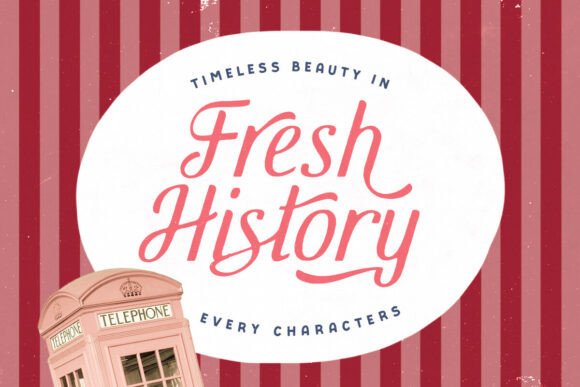
Fresh History is a lively and charming script font that beautifully captures the timeless, hand-painted look of vintage sign writing with a fun, slightly bouncy modern energy. Its personality is warm and inviting, making it perfect for brands that want to convey creativity, approachability, and a touch of nostalgia. The font’s slight bounce gives it a playful edge, while its elegant strokes add a sense of sophistication.
I first tested Fresh History in the hero section of the website. Placing it over a soft image of a handcrafted item, it added just the right amount of visual interest without overwhelming the content. The font’s natural flow made it feel like a handwritten note from the brand itself, which aligned perfectly with the client’s vision.
Where to Use Fresh History in Web Design
Fresh History is incredibly versatile. It works well in a variety of contexts, including:
- Website headers and titles
- Hero sections and landing pages
- Call-to-action buttons and short phrases
- Online shop banners and product listings
- Blog headers and social media graphics
- Course sales pages and promotional landing pages
- Portfolio sites and creative branding kits
- Campaign pages and branded web content
Its decorative nature makes it ideal for accents and emphasis, but it also holds up well as a primary typeface when used thoughtfully. For example, I’ve seen it used effectively in a coaching website’s header to create a friendly yet professional tone, and in a portfolio site’s logo to add a unique character to the brand’s visual identity.
Readability and UX Considerations
While Fresh History is visually appealing, I always consider how it performs in different environments. On mobile devices, the font’s legibility can be affected by small screen sizes and low resolution. To ensure readability, I recommend using it sparingly and pairing it with a clean sans serif font for body text.
Testing Fresh History on dark backgrounds revealed that its contrast with light text was strong enough to maintain clarity, but on light backgrounds, it needed more depth. Adding subtle shadows or outlines can help improve visibility without sacrificing the font’s charm.
Another consideration is responsiveness. I made sure to test the font at various screen sizes, especially on smaller buttons and navigation menus. While Fresh History works well in larger text, it may not be the best choice for tiny UI elements where clarity is key.
Font Pairing and Brand Consistency
When choosing fonts for a project, I often think about how they complement each other. Fresh History pairs beautifully with a simple sans serif font like Montserrat or Lato for body copy. This combination creates a balance between the decorative and the functional, ensuring that the user experience remains smooth and intuitive.
For a more editorial feel, I’ve also paired Fresh History with a serif font like Playfair Display. This adds a layer of sophistication while maintaining the font’s playful energy. However, it’s important to keep the overall typography consistent to avoid visual clutter and maintain brand identity.
Technical Considerations Before Deployment
Before implementing Fresh History in a live project, I always check the following:
- Whether the font includes all necessary styles (regular, bold, italic, etc.)
- If it’s available as a webfont (e.g., through Google Fonts or a premium font service)
- The file formats supported (WOFF, WOFF2, TTF, etc.)
- Availability of alternates and weights
- Support for multilingual characters if needed
- Commercial licensing details for use in client projects or online stores
These checks help ensure that the font will perform well across different platforms and devices, and that it meets any legal requirements for commercial use.
Conclusion
Using Fresh History in a real-world project has been a great experience. It brings a unique personality to digital layouts without compromising readability or usability. Whether you’re designing a boutique online store, a course sales page, or a creative portfolio, this font offers a fresh and engaging way to express your brand’s voice through typography.